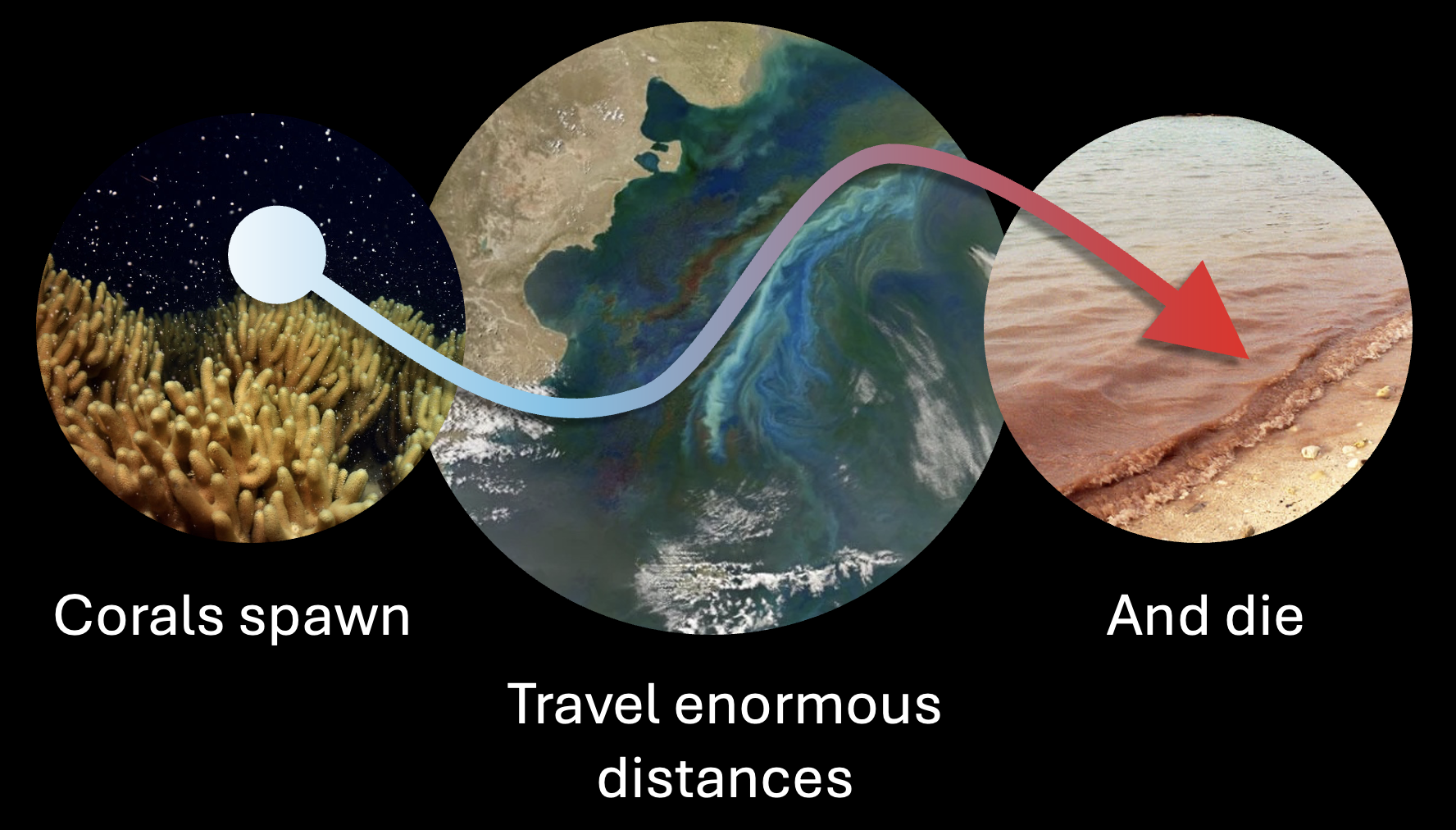
Unlike humans, almost all coral babies die before becoming an adult. A single adult coral can produce millions of babies each year, but only a few make it back to the reef. An even smaller fraction survive and grow into mature adults that can reproduce.
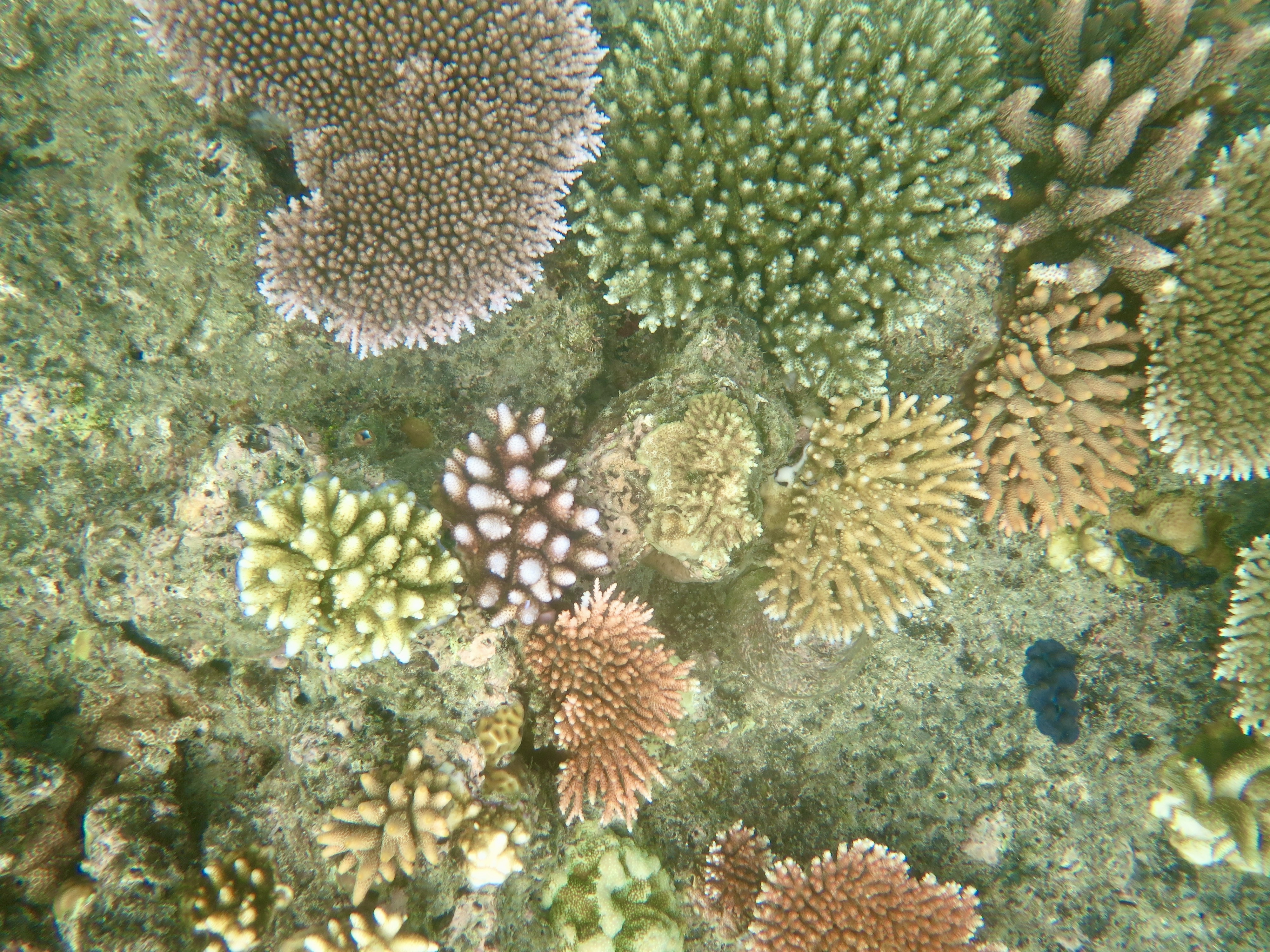
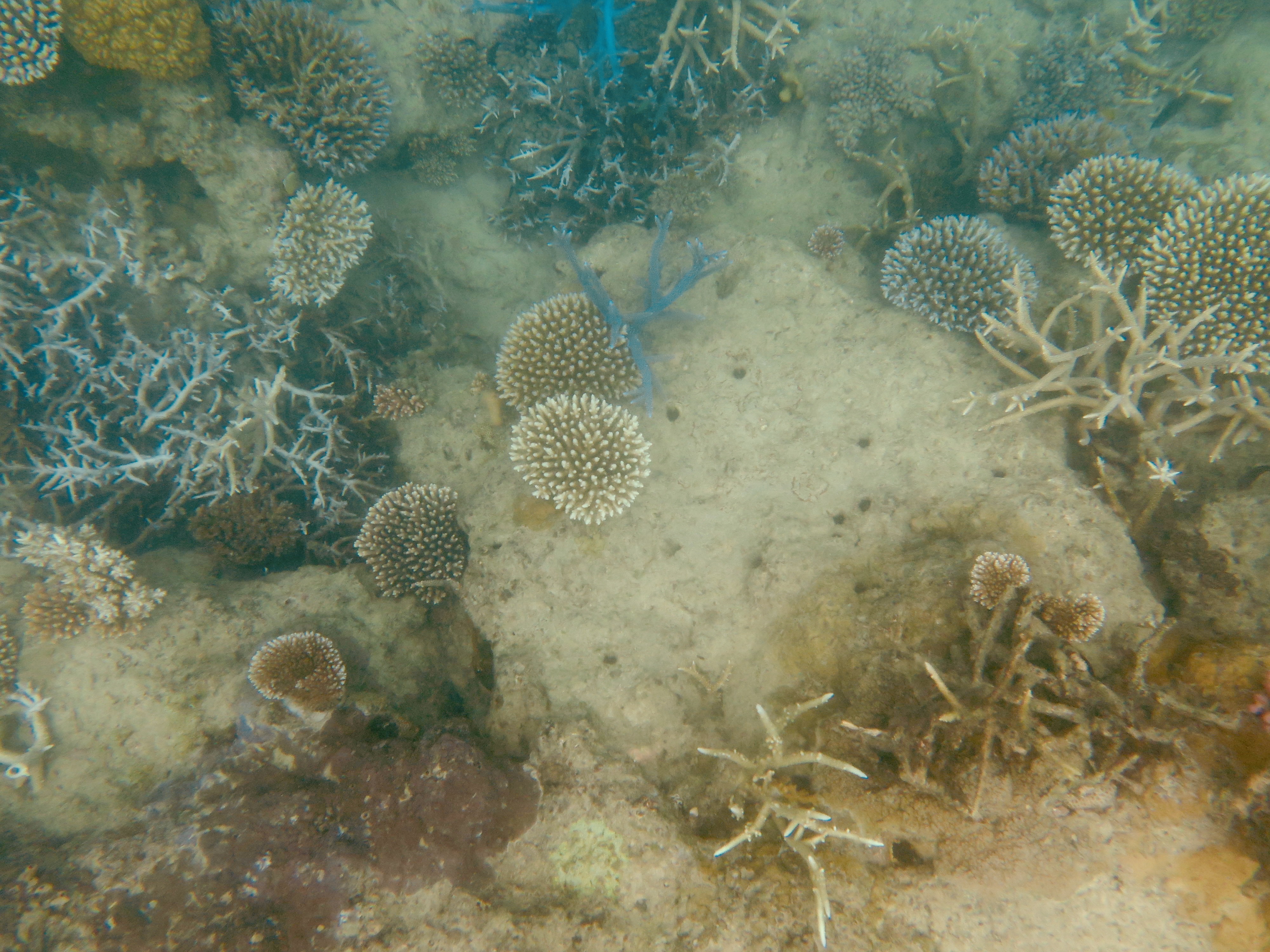
Our research group believe that the early life stages of corals are the most crucial for their population growth and resilience. Look at the pictures below. Do you see how small corals tend to sprout from holes and cracks in the reef? The flat parts of the reef tend to have algal growth.
Our group has been working hard on understanding reef features (nooks and crannies) that entrain coral larvae and give them a place to hide and survive while they are small. So far, there are five generations of designs (G1 to G5). See if you can find your design below.
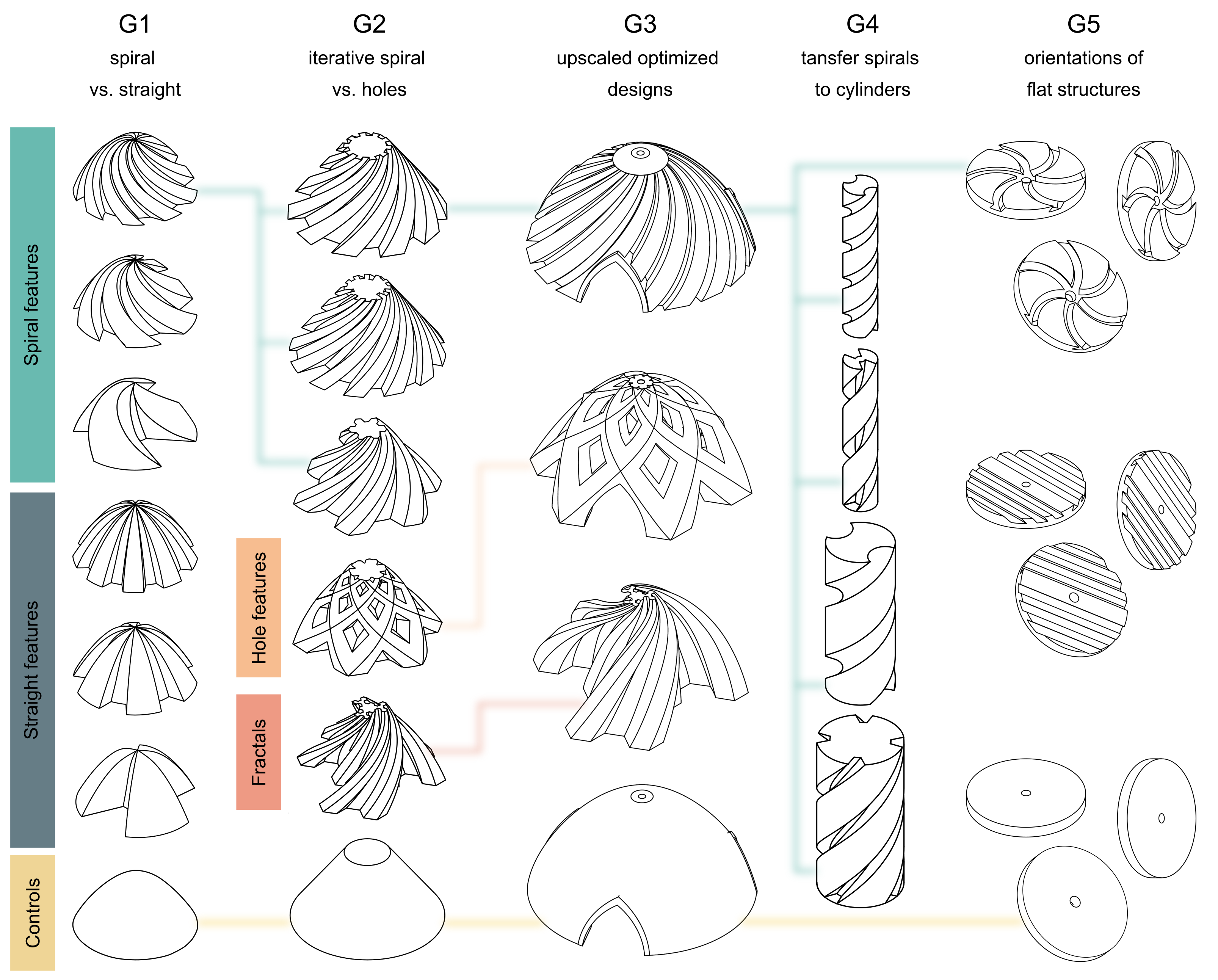
We 3D print lots of modules and place them on the reef in different environments and see which ones attract the most coral babies. You have one of these ceramic 3D prints. It has been kiln fired so that it is strong and will last on the reef for many decades, much like ceramic items found in ship wrecks.
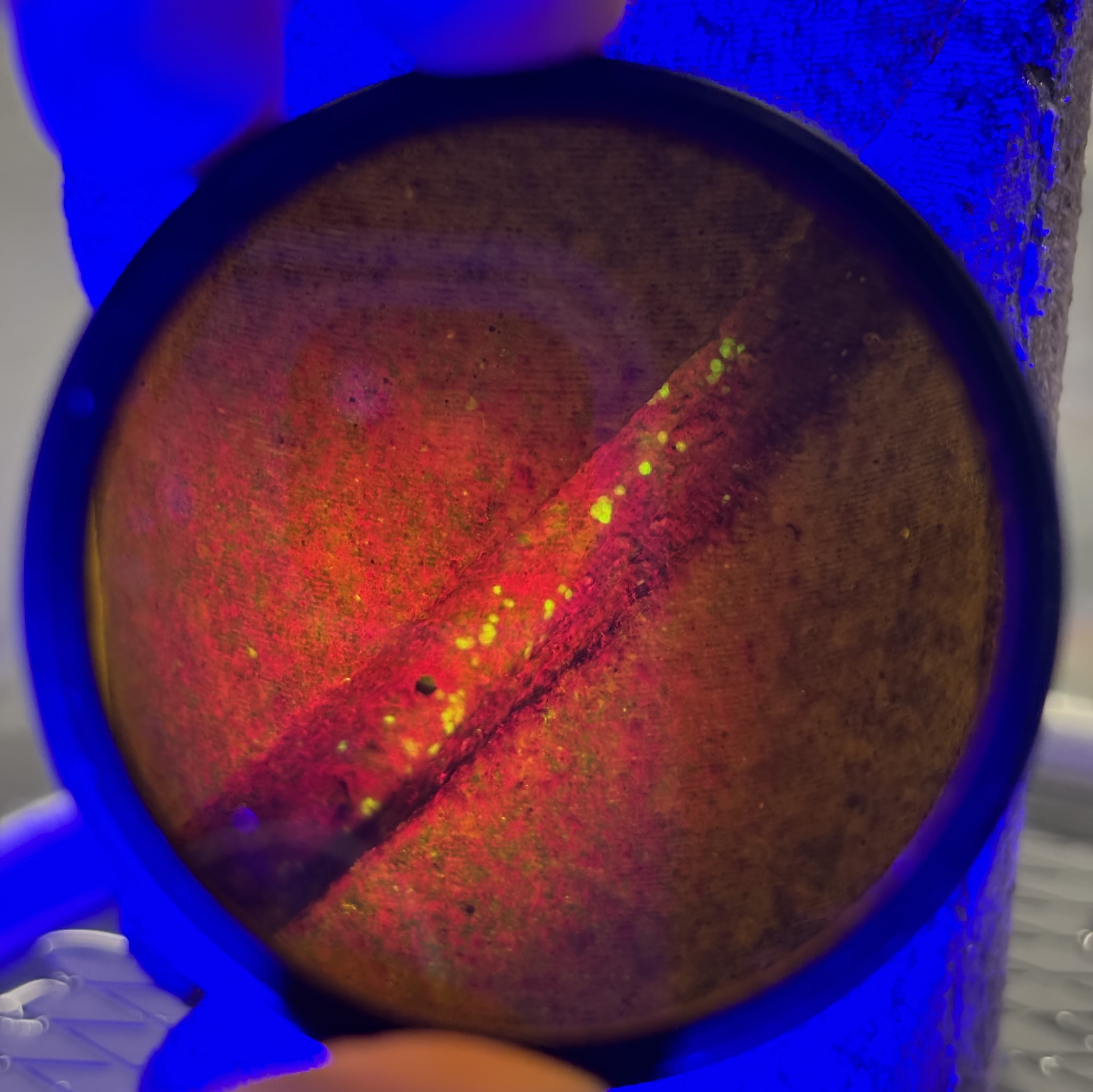
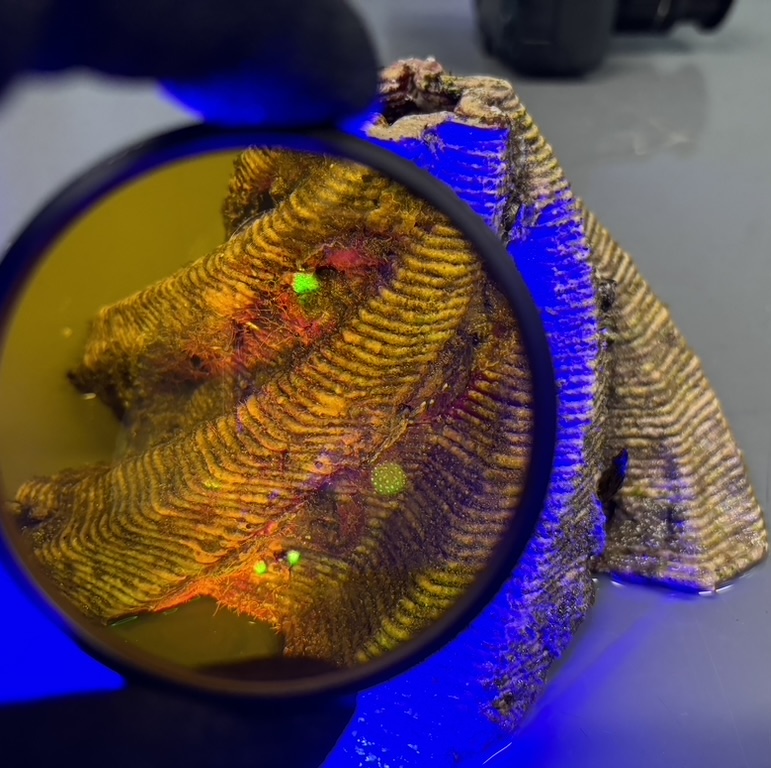
We use blue light to count coral settlers, like in the pictures below. Do you see how they prefer the sheltered nooks and crannies? Coral babies don’t survive as well on exposed, flat areas because they get overgrown by algae or grazed off by fish and sea urchins. Angular crevices also help minimize sediment build-up that smoothers small corals.
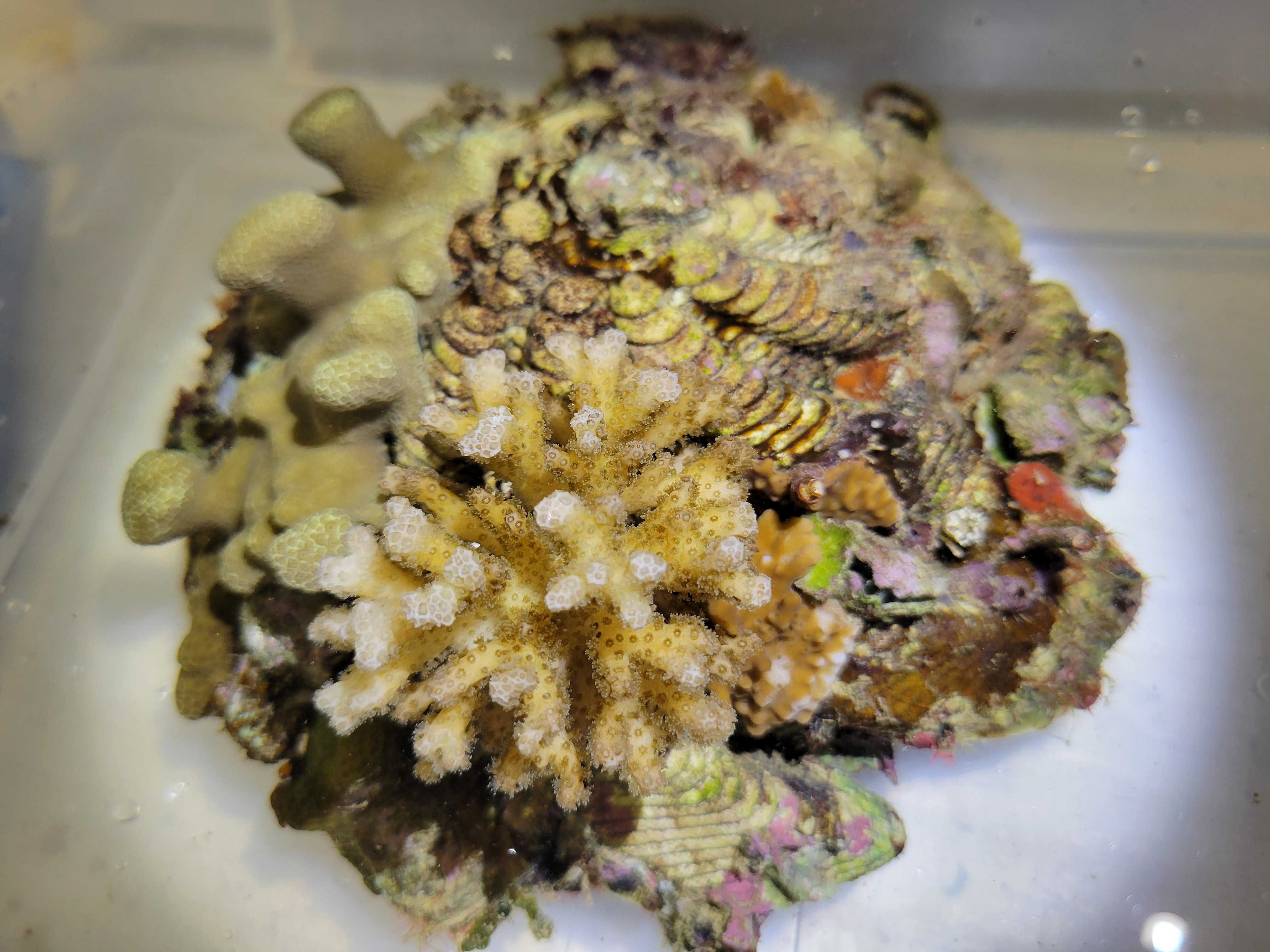
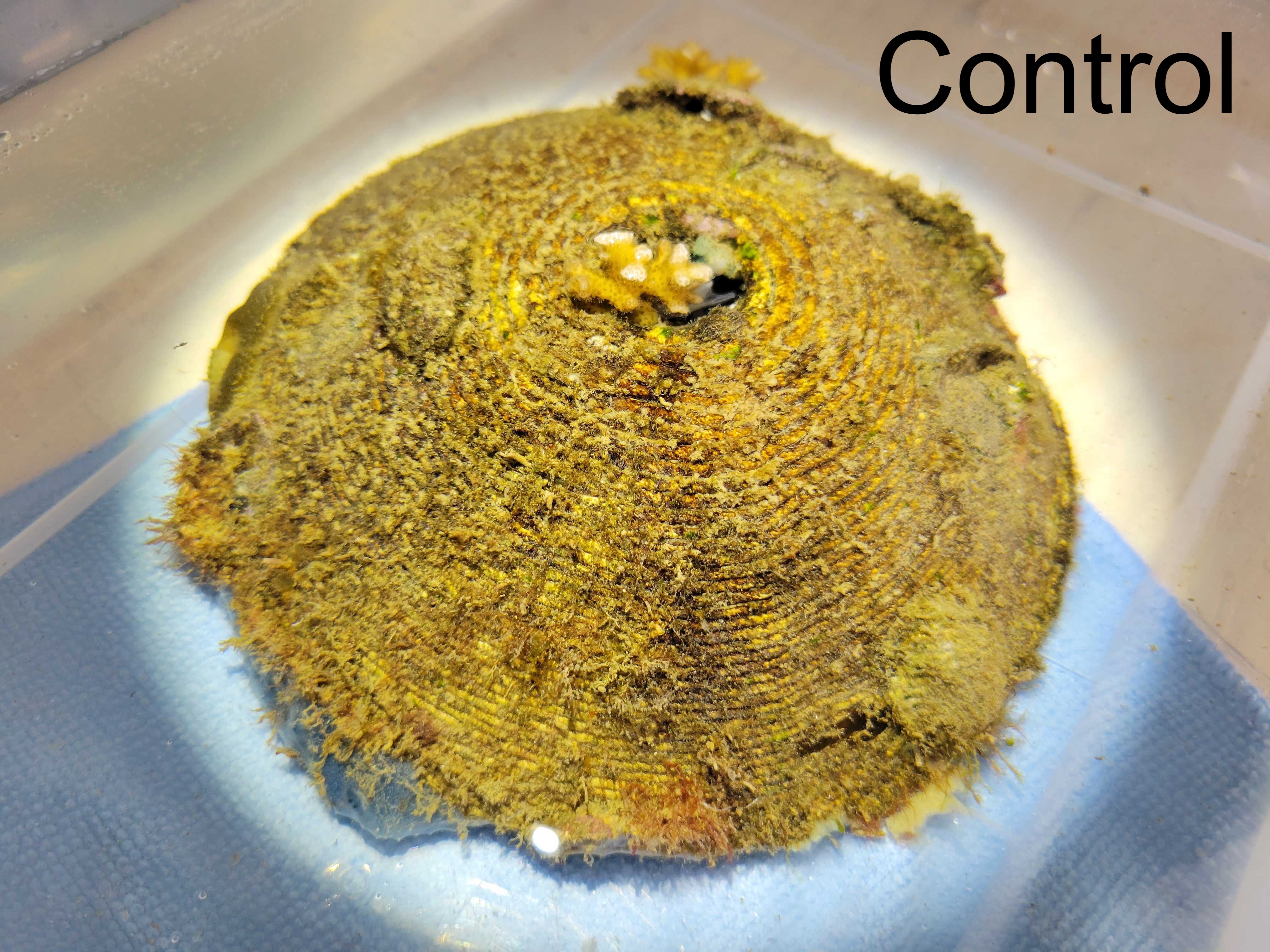
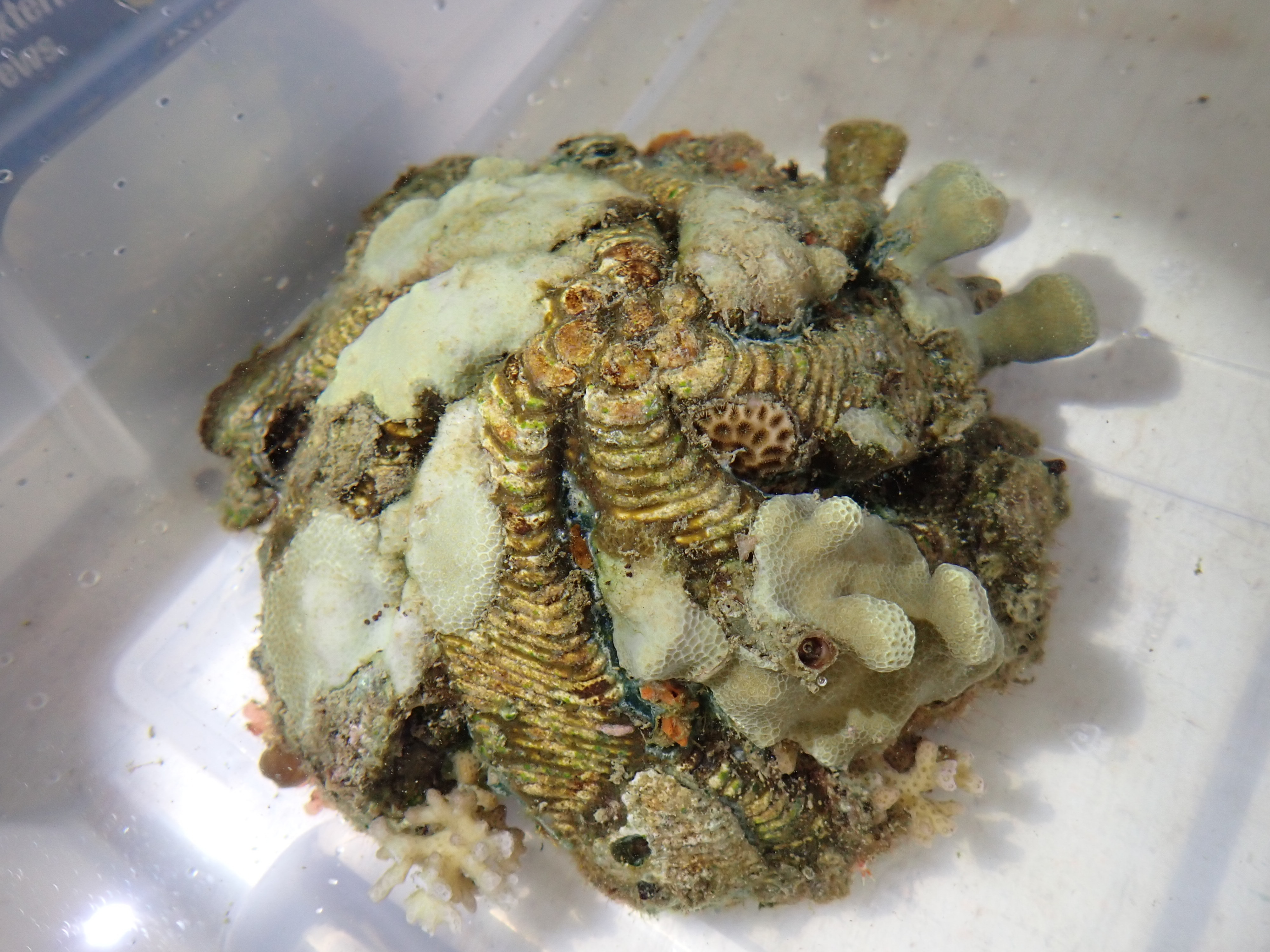
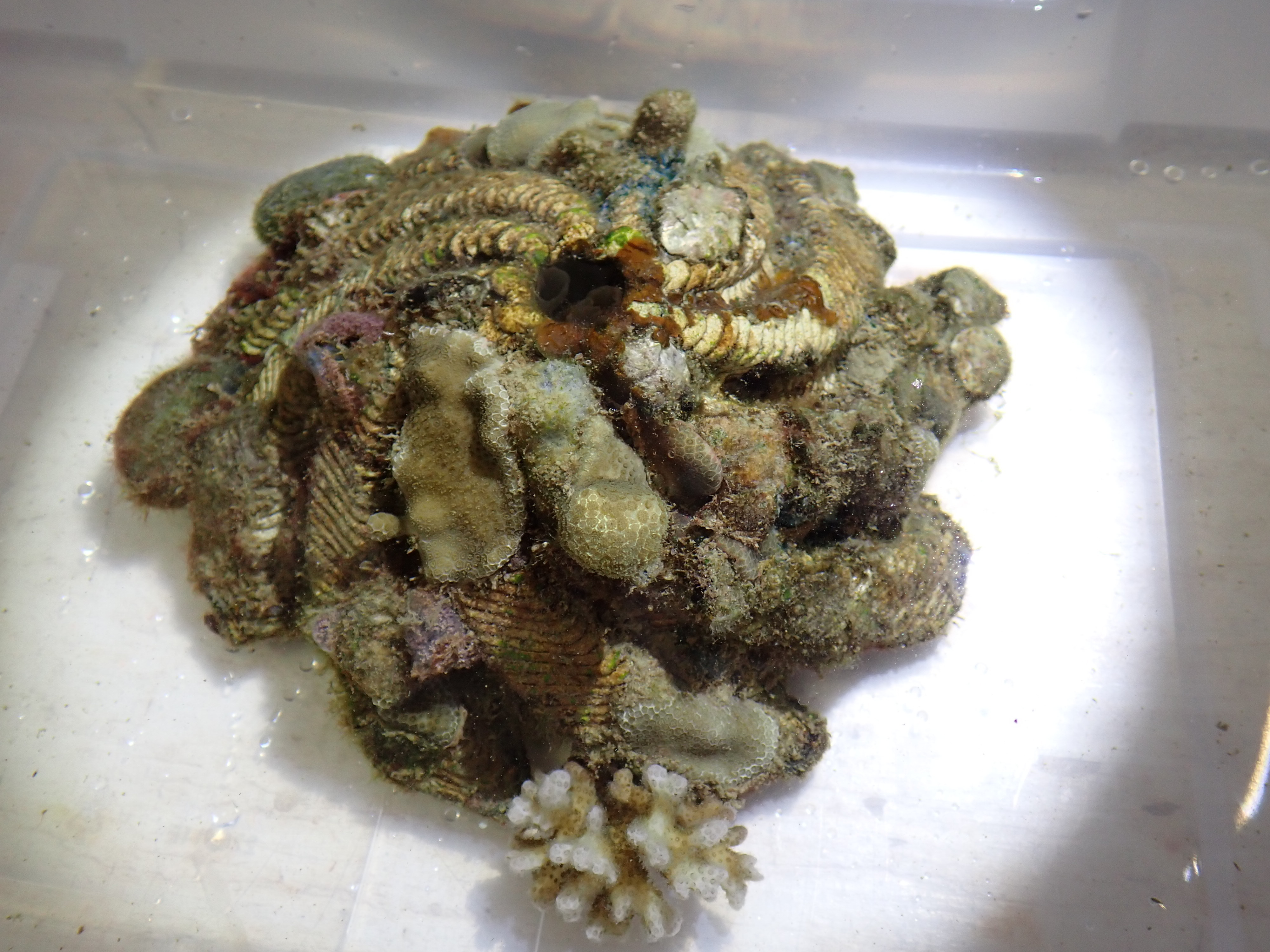
After about 18 months, our ceramic modules tend to look like the pictures below. You can see the modules with our designs have many more corals than control modules that are smooth and mostly have algae growing on them.
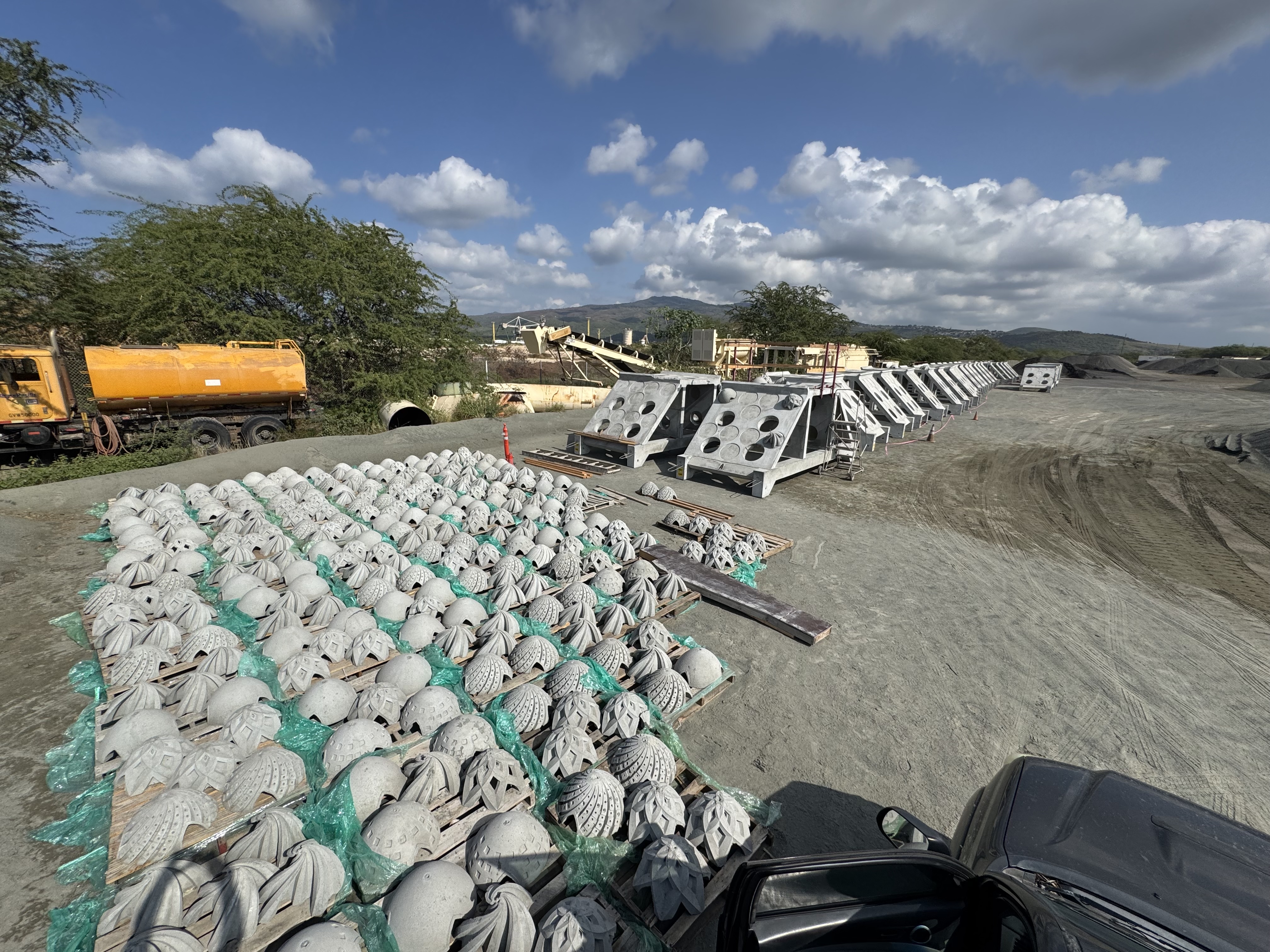
We take the designs we’ve been testing with ceramic and scale them up using concrete. These concrete domes can be produced in larger numbers and added to reef restoration projects to help kick-start coral growth.